
System Map (Excalidraw)
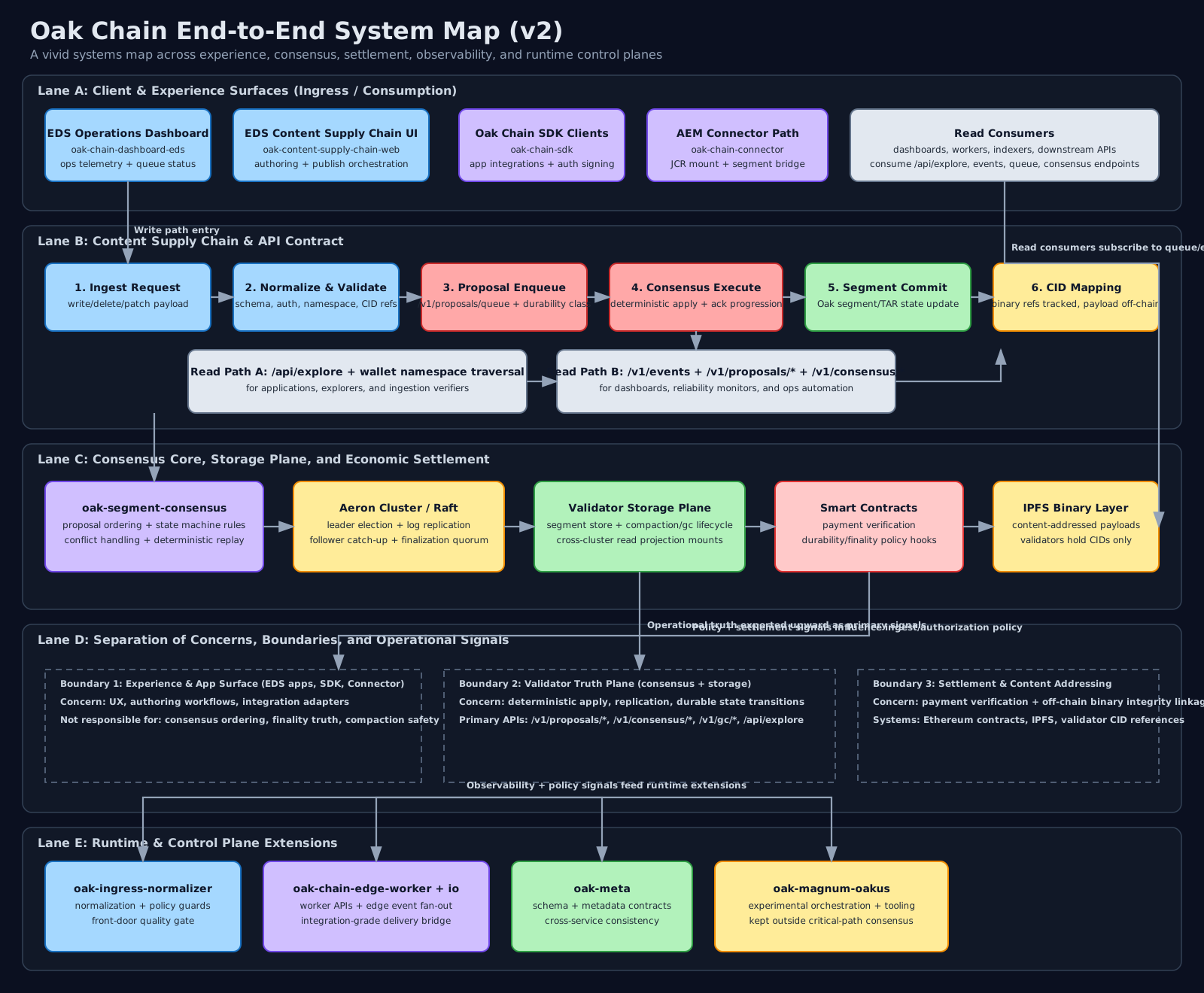
If you only read one architecture artifact, use this one. It shows how request entry, consensus truth, settlement checks, and binary/storage behavior connect as one runtime.
Diagram
Related companion visual:
Excalidraw Source
- Editable source (v2):
public/diagrams/oak-chain-system-map-v2.excalidraw
Why This Map Matters
Most people miss Oak Chain by looking at isolated docs pages. This map closes that gap by showing where each module sits in the full write-to-read path.
How To Read The Map
- Start at the experience surface (
dashboard,supply chain app,SDK,connector). - Follow requests into the consensus truth plane (
oak-segment-consensus,Aeron/Raft, validator cluster). - Track settlement and addressing dependencies (
smart contracts,IPFS binary layer). - Use observability surfaces (
/v1/queue,/v1/consensus,/v1/gc, events) to verify runtime behavior.
Critical Paths
1) Authoring Write Path
- Ingest from app, SDK, or connector.
- Normalize and validate namespace/auth.
- Enqueue proposal with durability class.
- Execute consensus and commit segment state.
- Link CID references for binaries.
Primary docs:
2) Settlement and Policy Path
- Payment proof and contract checks gate writes.
- Finality/durability policy influences queue progression.
- Contract outcomes surface back into validator policy and ops telemetry.
Primary docs:
3) Read and Delivery Path
- Committed content surfaces through read APIs.
- Events stream enables near-real-time consumers.
- Binary retrieval resolves via CID and gateway surfaces.
Primary docs:
Covered Components
| Component | Role | Canonical Doc |
|---|---|---|
oak-chain-dashboard-eds | Runtime/ops entry surface | Primary Signals |
oak-content-supply-chain-web | Content ingest and policy entry surface | Proposal Flow |
oak-chain-sdk | App integration surface | Integration Guide |
oak-chain-connector | AEM integration surface | Integration Guide |
oak-segment-consensus | Proposal state machine + segment commit | Consensus Model |
Aeron Cluster / Raft | Replication + leader election | Consensus Model |
oak-chain-smart-contracts | Settlement verification boundary | Testnet Guide |
IPFS binary layer | CID-backed binary durability path | Binary Storage |
oak-ingress-normalizer | Request normalization and policy guards | Proposal Flow |
oak-chain-edge-worker + oak-chain-edge-worker-io | Worker APIs and edge event fan-out | Real-Time Streaming |
oak-meta | Schema and metadata control | Content Paths |
oak-magnum-oakus | Experimental orchestration/tooling (non-critical path) | Project Composition |
What Changed In v2
- Expanded content supply chain into explicit ingest -> validate -> enqueue -> consensus -> commit -> read surfaces.
- Expanded smart-contract responsibilities around payment verification, durability/finality policy hooks, and settlement signals.
- Added stronger separation-of-concerns framing across experience, consensus truth plane, settlement/addressing, and observability.
- Added a runtime/control-plane lane to capture
oak-ingress-normalizer,oak-chain-edge-worker,oak-chain-edge-worker-io,oak-meta, andoak-magnum-oakus.
Excalidraw Power Use
- Use browser find (
Cmd/Ctrl+F) in the.excalidrawsource for component IDs and lanes. - Keep one box per runtime responsibility and one arrow per dependency contract.
- When adding components, update both the diagram and the component table on this page in the same change.
- Preserve the critical path ordering: ingest -> verify -> enqueue -> consensus -> commit -> read.
Version Metadata
- Current map:
v2 - Source of truth file:
/public/diagrams/oak-chain-system-map-v2.excalidraw - No
v1Excalidraw source is published in this repo. - Last reviewed scope: experience, consensus, settlement/addressing, observability, runtime/control-plane
- Update trigger: any new runtime module or dependency that changes write, settlement, or read paths